Veneers are a common cosmetic dentistry treatment that improves the color, shape, size, and alignment of teeth to improve their appearance. Veneers are custom-made to fit over the front surface of the teeth, providing a natural and aesthetically acceptable appearance. They are created from thin shells of porcelain or composite resin. Many dental flaws, such as discolored, chipped, misaligned, or irregularly spaced teeth, are frequently addressed with them.
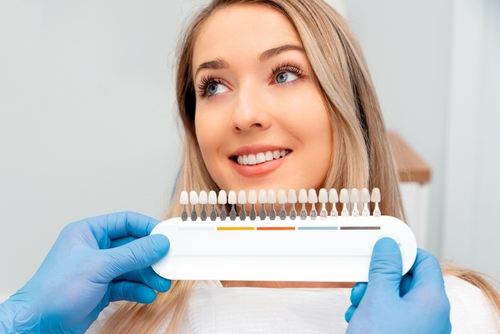
Because of their longevity and capacity to replicate the light-reflecting characteristics of natural teeth, porcelain veneers are quite popular. Because porcelain is stain-resistant, it’s a great option for people who desire a bright, long-lasting smile. Conversely, composite resin veneers are a less expensive choice. Even if they are not as strong as porcelain, they can nevertheless produce fantastic results—especially when used by a dentist with experience. Additionally, composite veneers are easier to fix if they chip or break.
A dentist consultation is usually the first step in the veneer procedure, which consists of multiple procedures. The dentist will inspect your teeth and go over your desired outcomes during this session. To gain a better understanding of your oral structure, they could take X-rays or dental impressions. The next stage, if you qualify, is to get your teeth ready for the veneers. To guarantee that the veneer fits the tooth properly, a tiny bit of enamel must often be removed. Local anesthetic is typically administered to reduce discomfort during this portion of the treatment.
Following the preparation of the teeth, the dentist will take impressions, which are subsequently forwarded to a dental laboratory for the creation of your personalized veneers. A few days to a few weeks may pass during this process, depending on how complicated your case is. Your teeth may be protected in the interim by temporary veneers. Upon completion of the permanent veneers, you will visit the dentist one more time for the final fitting.
The dentist will use a special glue to carefully bond the veneers to your teeth during the fitting appointment. To make sure the veneers feel and look natural, they will inspect the veneers’ fit and color. To get the right look, they could make little alterations after the veneers are bonded, including trimming or polishing the edges. The outcome is a beautiful, faultless smile that enhances your appearance and self-esteem.
Beyond just being attractive on the outside, veneers provide several advantages. They offer a speedy fix for dental issues like crowns and orthodontics that could otherwise call for more involved care. For example, veneers can hide stains that are resistant to whitening procedures, rectify minor misalignments, and seal small gaps between teeth. Furthermore, veneers provide an additional layer of protection by strengthening teeth that are weak or worn down.
Veneers are minimally intrusive, which is one of their main advantages. In contrast to crowns, which necessitate extensive tooth contouring, veneers only require a tiny layer of enamel to be removed. Because veneers preserve your natural tooth structure, they are a more conservative choice for improving your smile. In addition, the surgery is usually painless and requires little recovery time, so patients can quickly resume their normal activities.
Veneers do have certain possible drawbacks, just like any dental procedure. Because only a tiny bit of enamel is removed, there is no turning back from this process. Your teeth will never be completely protected after veneers because they won’t have the natural enamel to shield them. Furthermore, even though porcelain veneers are quite strong, they can still chip or crack if you bite down on something hard or grind your teeth. The lifespan of veneers depends on routine dental examinations and proper oral hygiene habits.
Cost is an additional factor to consider. The cost of veneers, particularly porcelain ones, can be high and varies based on the dentist’s experience level, the location, and the quantity of teeth being treated. Although composite veneers are less expensive than porcelain veneers, they usually break down more quickly and need to be replaced or repaired more frequently.
Veneers are nevertheless a great choice for people who want to rapidly and efficiently alter the appearance of their teeth in spite of these factors. Porcelain veneers are a great purchase for many people because they can last up to 15 years or more with proper care. To keep your veneers in top condition, maintain them by brushing and flossing on a regular basis, avoiding foods and activities that could damage them, and scheduling routine dental exams.
In the end, veneers can completely change your smile and give you the courage to smile broadly. They offer a solution for many different aesthetic dental problems while keeping most of the original tooth structure. With veneers, you can effectively get a beautiful, long-lasting smile, regardless of whether you pick porcelain or composite resin.