For those who are lacking teeth, dental implants are a game-changer because they provide a long-lasting, aesthetically pleasing substitute for bridges and dentures. Dental implants are surgically inserted into the jawbone to create a strong foundation for replacement teeth. Titanium is the material used to make the implants, and it is well known for its strength and capacity to fuse with human bone. Getting dental implants is a multi-step process that is necessary for the implant’s proper osseointegration—the joining of the implant with the jawbone.
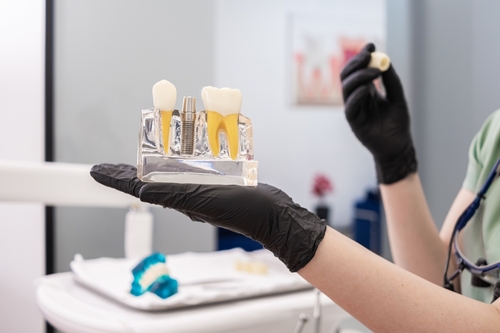
An examination by a dentist is the initial stage in the dental implant procedure. Dental implants are not suitable for everyone since a number of variables, including bone density, gum health, and general oral hygiene, affect how well the implant functions. In order to repair the jawbone in preparation for the treatment, a bone transplant can be required if it is not dense enough to support the implant. By doing this initial step, the implant will have a strong base for stability throughout time.
The implant is surgically placed after the patient is judged to be a good candidate. After exposing the bone through a gum incision, the oral surgeon or Fairfax dentist drills a tiny hole to accommodate the titanium post. This post firmly anchors the replacement tooth in the jaw by serving as its root. Osseointegration, the process by which the implant and bone merge over the course of several months, creates a sturdy foundation akin to a real tooth root. This procedure is essential to the implant’s long-term success but may take several months, contingent on the patient’s rate of healing and bone quality.
The abutment, a tiny connecting component that rests above the gum line, must be attached once the implant has completely fused with the jawbone. The crown, or the portion of the tooth that is visible, can be attached to the abutment. To ensure a seamless and natural appearance, crowns are manufactured to order to match the patient’s original teeth in terms of size, shape, and color. While the permanent crown is being made at a dental lab, temporary crowns may occasionally be inserted.
The permanent crown is attached as the last stage of the dental implant procedure. Following crown placement, the dental implant performs indistinguishably from a normal tooth. With confidence, patients may chew, speak, and smile knowing that their dentures won’t move or hurt them. Dental implants are incredibly strong and long-lasting with the right maintenance.
The potential of dental implants to stop bone loss is one of its biggest benefits. The jawbone starts to degenerate when a tooth is lost since it isn’t getting the stimulation that a tooth root provides. By preserving facial structure, halting more bone loss, and stimulating the bone, dental implants function similarly to natural teeth. This is especially crucial for those who have experienced multiple tooth loss because it can cause the look of sunken or aging.
Dental implants have many advantages above just preserving bone. Dental implants are locked in place and do not move, in contrast to dentures, which occasionally slip or cause trouble when eating or speaking. A greater degree of comfort and stability are offered by this. Additionally, unlike bridges, which frequently need the surrounding teeth to be altered, implants do not require this. Consequently, they aid in preserving the structural integrity of the neighboring teeth and avert future dental issues.
Maintaining dental implants is comparable to maintaining natural teeth. Maintaining the health of the gums and surrounding tissues requires regular brushing, flossing, and dental examinations. Even though dental implants are resistant to deterioration, if adequate oral hygiene is not maintained, the gums surrounding them may still become infected. Implant failure can result from periodontal disease if the bone supporting the implant is weakened. For this reason, regular dental checkups and good oral hygiene are essential to the implant’s longevity.
Even though dental implants have many advantages, not everyone may benefit from them. Individuals who smoke or have long-term medical illnesses like diabetes may be more susceptible to complications since these disorders can slow healing and raise the risk of infection. Furthermore, dental implants are more expensive than alternative tooth replacement methods. But in the long run, implants are frequently a more economical option because to their longevity and long-term advantages.
In summary, dental implants are a game-changer for those who are missing teeth because they offer a long-lasting, aesthetically pleasing, and practical replacement. A meticulous examination, surgical implantation of a titanium post, osseointegration, and the affixation of a custom-made crown are all part of the process. Dental implants can last a lifetime and stop the bone loss that comes with losing teeth if they are maintained properly. Dental implants are a fantastic alternative for anyone looking for a long-term tooth replacement because of their enhanced comfort, appearance, and oral health, even though the initial cost may be more.