For people who are afraid or anxious about going to the dentist, sedation dentistry, sometimes referred to as sleep dentistry, is a useful technique. Dental procedures often cause anxiety in patients, which causes them to postpone or forego necessary treatments. In order to ensure that patients can endure necessary treatments with the least amount of discomfort and stress, sedation dentistry creates a quiet and relaxed environment. People who have dental anxiety, a sensitive gag reflex, have trouble staying still for extended periods of time, or are afraid of needles and dental devices should especially benefit from it. Dentists can provide a comfortable and controlled process for their patients by employing sedatives.
Depending on the patient’s requirements and the difficulty of the dental procedure, several sedation degrees can be used. The lightest type of sedation, known as minimal sedation, keeps the patient awake but extremely relaxed. Conscious sedation, sometimes referred to as moderate sedation, keeps the patient awake but makes them less aware of what is happening. After the operation, they might not recall much of it. The patient is in a profound state of relaxation during deep sedation, which puts them on the verge of consciousness. They can still be roused. The strongest type of sedation, general anesthesia, knocks the patient out completely while the surgery is being done.
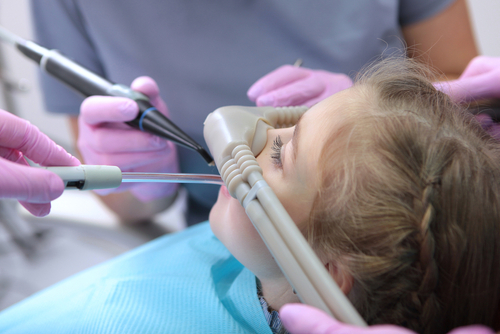
Depending on the dosage required, several sedation administration techniques are used. One of the most popular techniques is inhaled mild sedation, also known as laughing gas. The patient wears a mask over their nose to breathe in nitrous oxide and oxygen. After the operation, the patient can resume their regular activities without any lasting effects because this type of sedation wears off rapidly and helps the patient relax. For individuals who require some light relaxation but do not wish to be completely sedated, nitrous oxide is frequently employed. In order to maintain the patient’s comfort during the process, the dentist might modify the amount of sedation.
When using oral sedation, the patient takes a medication, usually one hour before the surgery. The degree of sedation caused by the medicine can vary, according on the dosage. Despite possibly feeling comfortable and sleepy, this type of sedation enables the patient to remain conscious throughout the process. For patients who prefer more than minimal sedation but find needles or intravenous sedation uncomfortable, oral sedation is a great option. It’s crucial to remember that oral sedation takes time to take effect, so patients need to make plans for getting to and from their dentist appointment.
Intravenous sedation, or IV sedation, is a more profound form of sedative that is given through a vein. It is fast acting and gives the dentist complete control over the level of sedation during the procedure. IV sedation is generally saved for people who are extremely anxious about their teeth or for more involved treatments. Reduced awareness of the operation due to a deeper state of relaxation helps reduce discomfort and anxiety in the patient. Patients undergoing IV sedation require a driver to accompany them home because the effects wear off more slowly than with little sedation.
When alternative sedatives are not enough to control a patient’s discomfort or anxiety, general anesthesia—the deepest kind of sedation—is typically utilized for lengthy dental procedures. When under general anesthesia, the patient is rendered entirely unconscious and won’t remember anything about the surgery. To guarantee patient safety while under this kind of sedation, close attention to the patient’s vital signs must be maintained throughout the process. It is frequently used for people with specific requirements who might have difficulty receiving traditional dental procedures, or for oral surgery such as the extraction of wisdom teeth.
Many benefits arise from sedation dentistry, particularly for people who are anxious or fearful of the dentist. By reducing anxiety and promoting relaxation in the dentist chair, it can help make even the most difficult dental procedures more tolerable. Additionally, the patient needs fewer dental appointments as anesthesia makes it possible for the dentist to do several operations in a single session. Sedation makes it possible for people to receive vital care without feeling pain or discomfort, especially for those who have sensitive teeth and gums or find it difficult to sit still for long.
But there are hazards associated with sedation dentistry. Patients are required to give their dentist their whole medical history, including a list of all the medications they are currently taking. Prior to giving out sedatives, the dentist must make sure that you are not using any medications or health problems that might interact with sedation. Furthermore, there is a slight chance of adverse effects like nausea, headaches, or allergic responses, even though sedation administered by a licensed dentist is usually safe. To ensure their patients’ safety, dentists regularly monitor them both during and after procedures.
In general, sedation dentistry has changed the way that dental care is provided. For those who, out of discomfort or fear, would ordinarily put off receiving important treatments, it provides an alternative. Dentists may ensure that their patients have a more comfortable and calm experience and can maintain their oral health without needless stress or anxiety by using sedation. Sedation dentistry enables patients to receive the care they require in a peaceful and pain-free setting, regardless of the complexity of the dental procedure or a simple cleaning.